
Oman / Old muscat
Oman and the Sea: From Magan to the Indian Ocean
An editorial journey through the National Museum of Oman, tracing copper from ancient Magan, maritime trade, Indian Ocean connections and the living heritage of the coast.
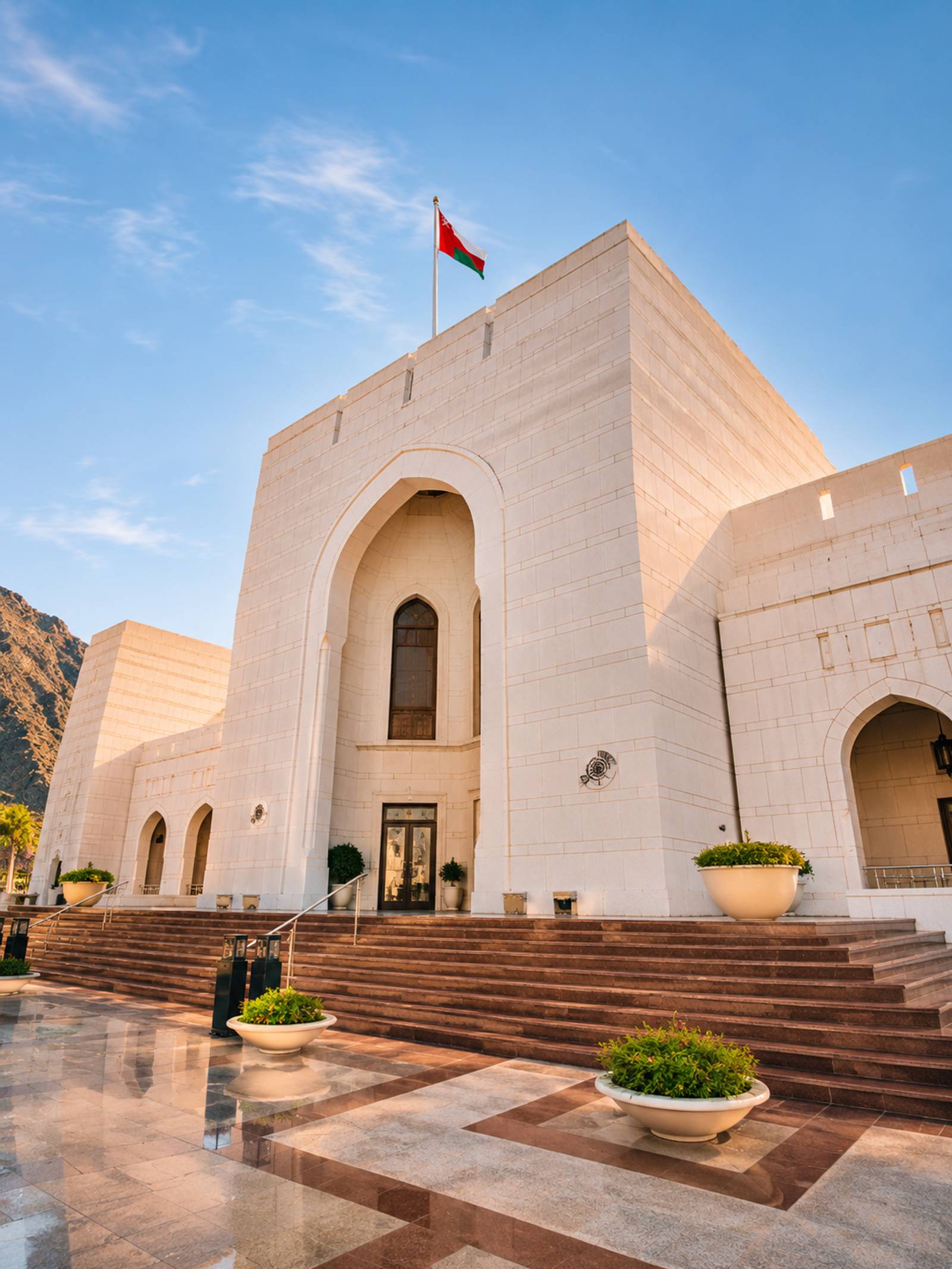
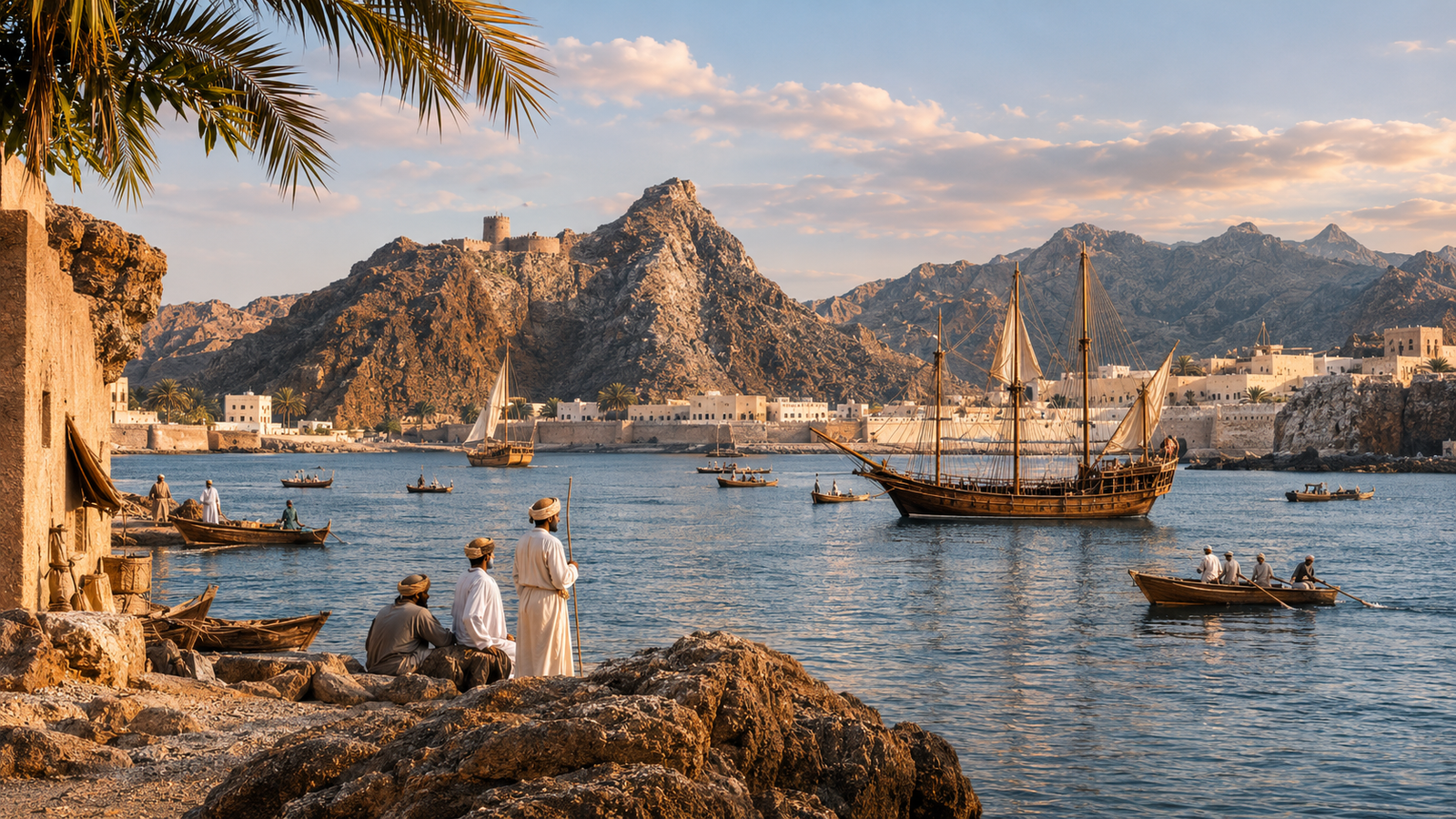
Oman’s coast offers more than a view. It opens onto a history of working boats, mineral exports, trading ports and journeys between communities around the Indian Ocean. Mountains and desert shaped life on land; the sea connected that life to distant markets.
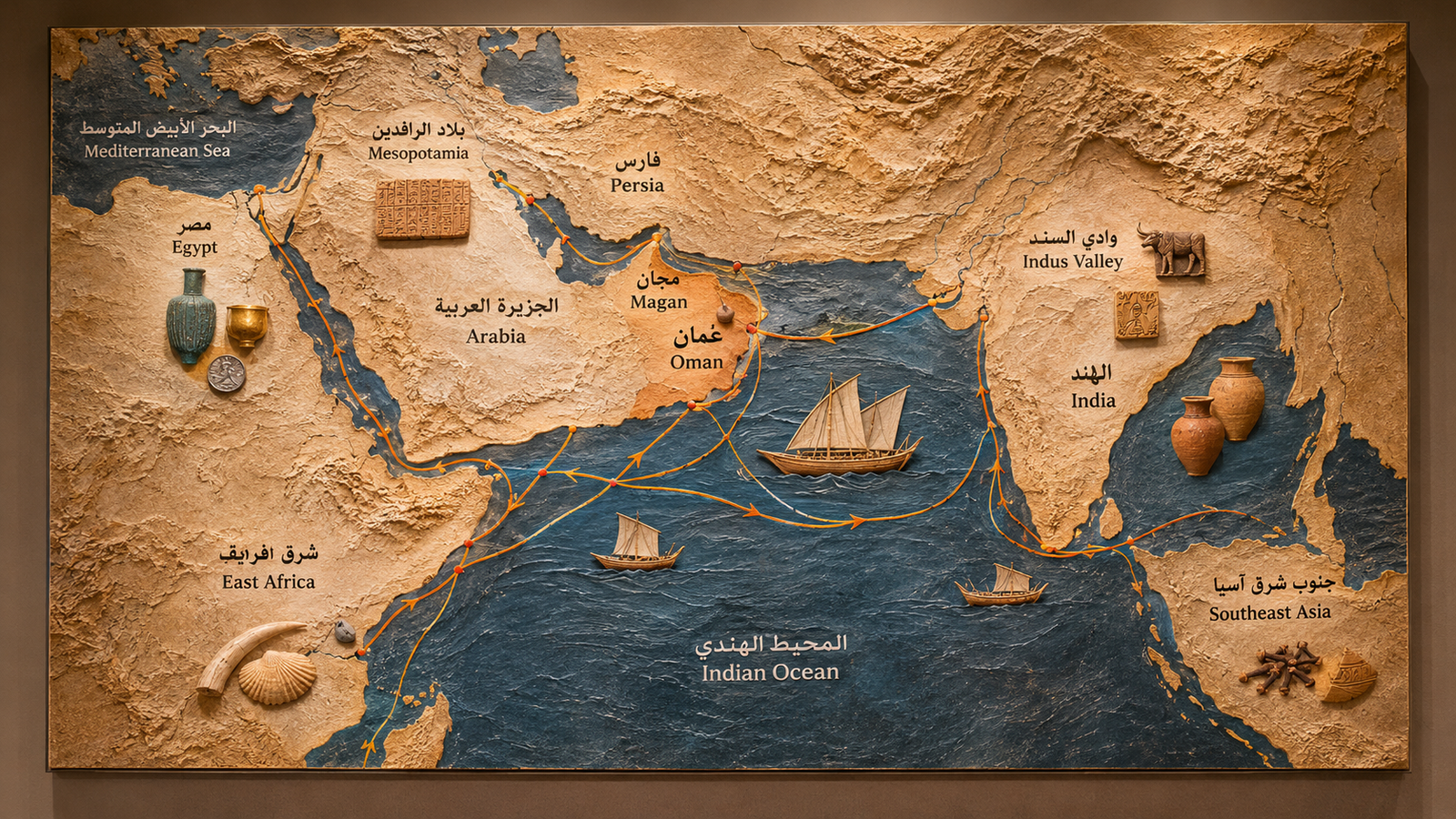
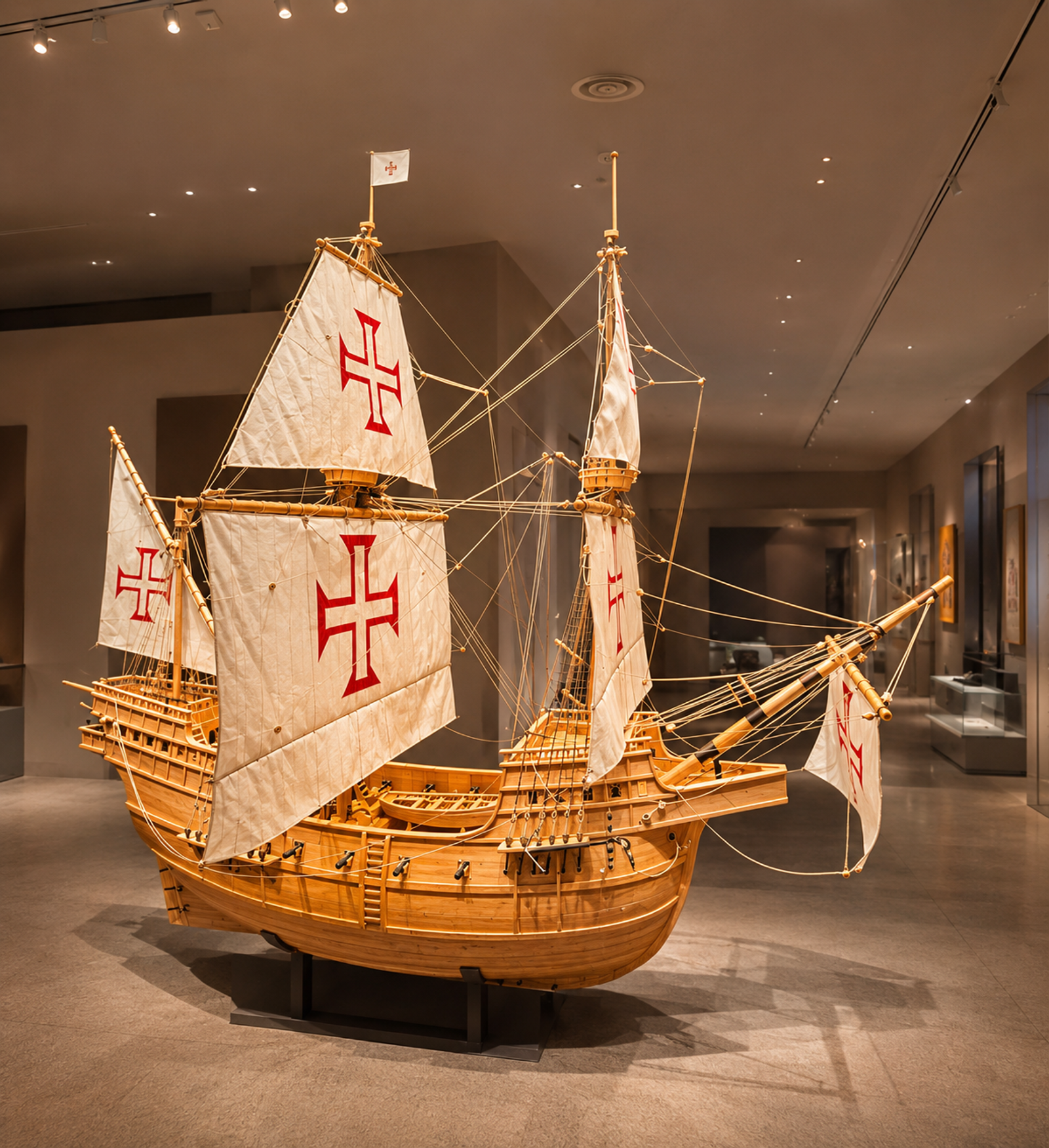
At the National Museum in Muscat, archaeological displays, ship models and maps offer ways into this wider story. Following those connections gives a journey through Oman another dimension. A harbour becomes a place to ask where people travelled, what their vessels carried and what they brought home.
Before the great sailing ports: the copper of Magan
The story begins long before the better-known maritime empires. Evidence of metallurgy in Oman reaches back to the late Neolithic, in the fourth millennium BCE. During the Bronze Age, copper production helped connect communities in southeastern Arabia with markets across the Gulf. [1]
Mesopotamian texts identify a copper-producing land called Magan. Archaeological and metallurgical research associates it principally with the Oman Peninsula, including parts of present-day Oman and the United Arab Emirates. Its ancient geography should not be treated as identical to modern national borders. [1, 2]
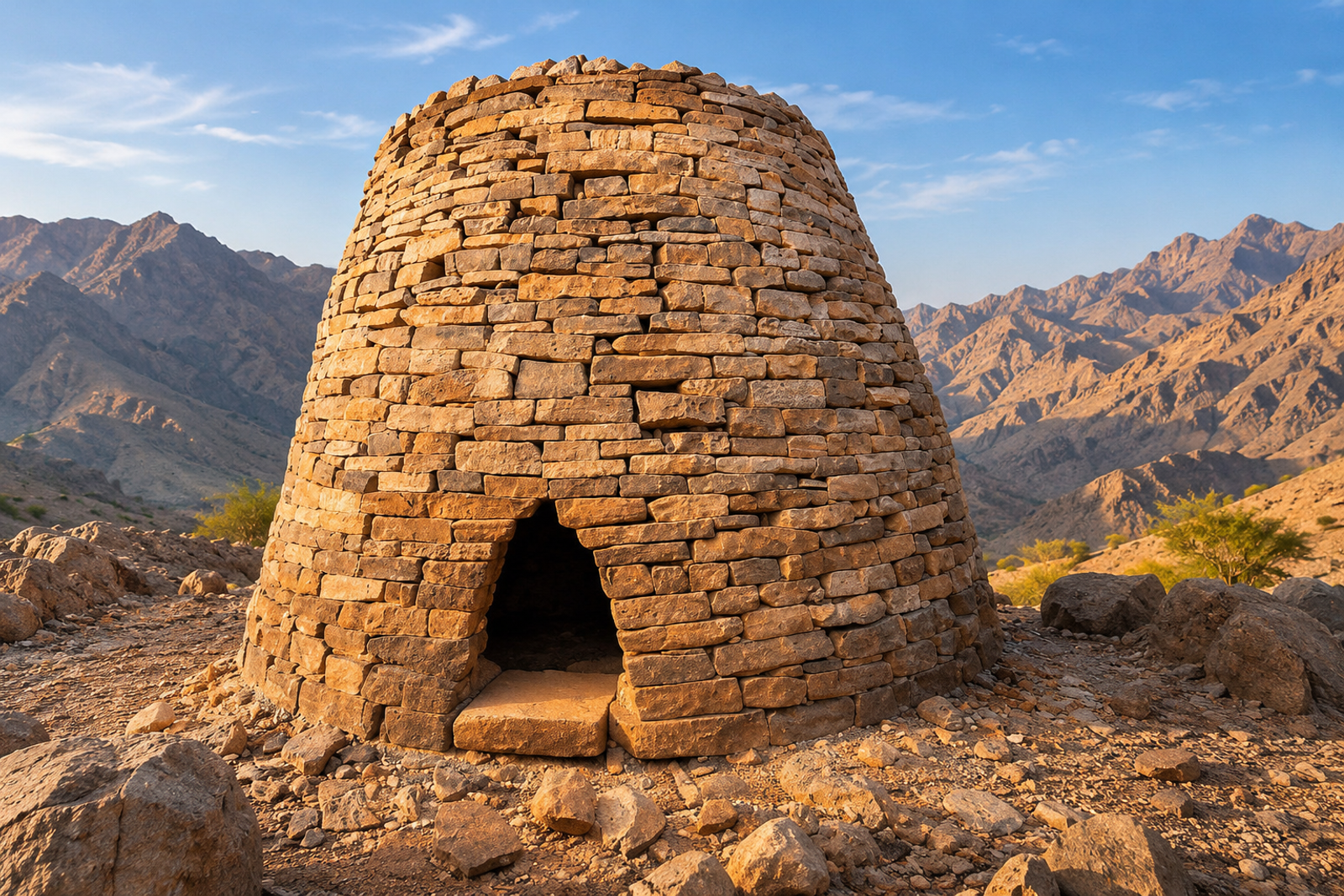
A museum panel describes references to Magan in texts dating to around 2300 BCE and highlights metalworking at al-Muyassar. Behind the exchange were practical tasks: extracting ore, processing it, smelting metal and moving it towards buyers. Oman’s early maritime story was connected to the work of communities inland. [3]
The stone tombs displayed in the museum offer another perspective on these societies. They draw attention to the people who lived, worked and commemorated their dead alongside the development of long-distance exchange.
What did the ships carry?
There was no single Omani cargo, or one route that remained unchanged through time. Bronze Age copper, the frankincense trade and the cargoes of later sailing vessels belong to different historical settings.
A departure port did not necessarily identify where a cargo had been produced. Ports also brought together goods carried by other merchants, allowing shipments to be sold and moved onwards.
Different ports, different histories
Sohar, Muscat, Sur and the ports of Dhofar each offer a different way into this history. Their roles and periods of prominence varied.
In the south, Khor Rori and al-Baleed form part of the UNESCO-listed Land of Frankincense. They help connect the story of an inland resource with the coastal places through which it reached wider markets. Elsewhere, accounts of traditional seafaring describe vessels leaving Sur, Sohar and Muscat with Omani produce and other merchandise. [4, 5]
The nineteenth century brought another chapter. Under Said bin Sultan, Oman’s maritime power and its political and commercial connections with East Africa and Zanzibar expanded. This later imperial world was very different from the Bronze Age networks of Magan. The coastline connects their stories geographically; thousands of years of change separate them historically. [7]
Exchanges that reached beyond the harbour
People carried skills, languages and beliefs along with their belongings. UNESCO describes maritime ports, including Muscat and Zanzibar, as centres of exchange between travelling populations. [6]
This offers a useful way to approach Oman’s cultural diversity. Its local identity developed through interaction with communities in Arabia, Persia, South Asia and East Africa, as well as through life within its own landscapes. Food, craft and architecture can prompt questions about those relationships. The history of an individual dish, design or object still deserves its own evidence.
These connections also involved unequal power and coercion. Zanzibar was an important East African slave-trading port. A full account of the maritime world must include people who were forced to cross the sea, alongside those who travelled by choice. [8]
Let the museum shape the rest of your journey
Visit the museum with a question to follow. Choose a map, a ship model or an archaeological object, then ask how it relates to a place beyond the gallery.
A later walk beside Muscat’s waterfront may prompt questions about arrival and departure. A journey to Sur can turn attention towards seafaring and boatbuilding. The archaeological landscapes of Dhofar offer another direction, following frankincense towards the sea.
For Routiva, this is an invitation to travel with curiosity: to see Oman’s coast as part of everyday life and as a setting for encounters across centuries. The sea helps explain why this corner of Arabia has so often looked outward.
Visiting the National Museum of Oman
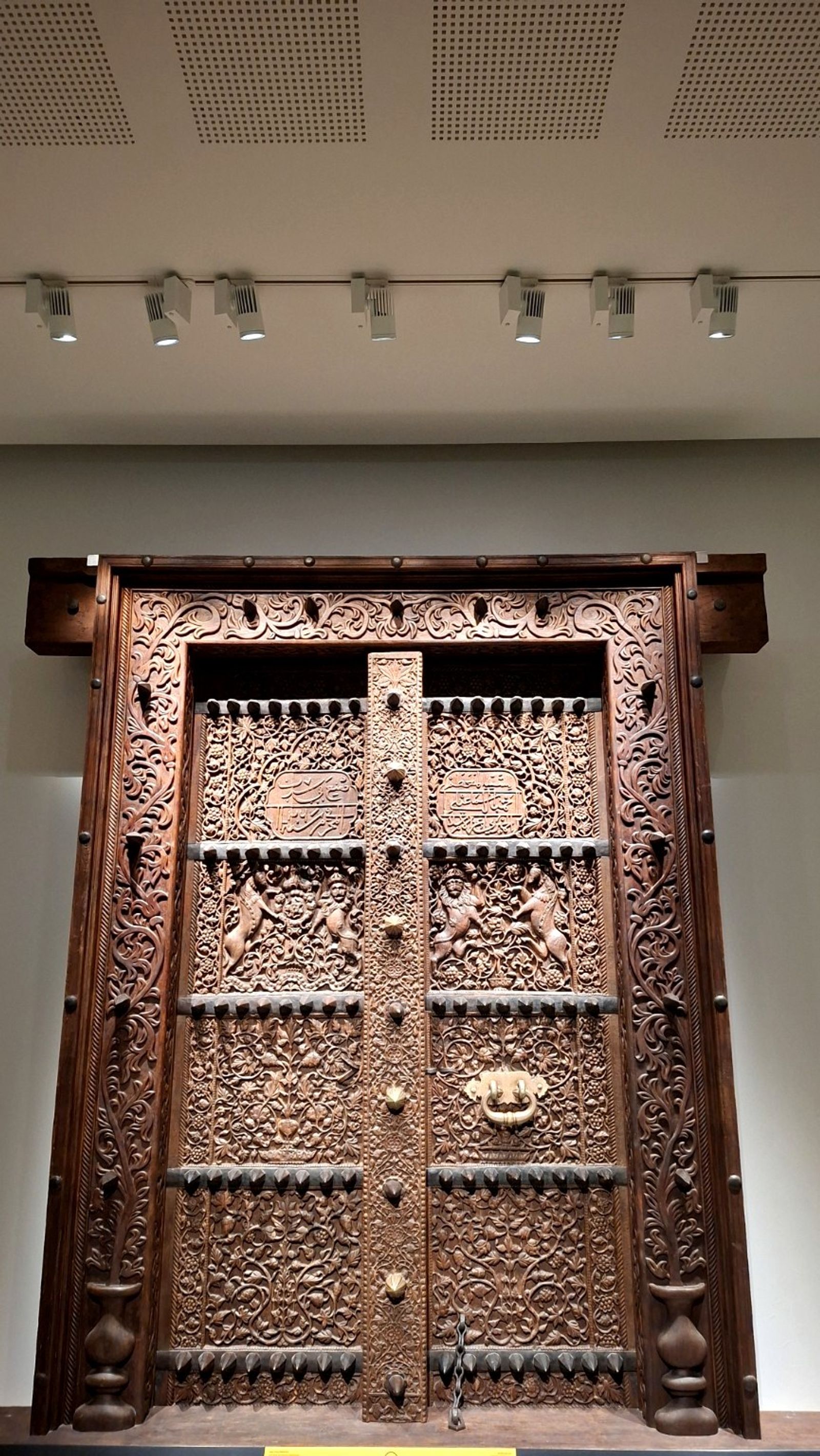
The museum stands in Old Muscat, opposite Al Alam Palace. Allow around 2–3 hours for a thoughtful visit. Bring suitable identification or an Oman resident card for category-based admission.
Visitor essentials
- Location
- Old Muscat, opposite Al Alam Palace
- Opening hours
- The museum working-hours page lists 10:00 AM–5:00 PM, with last ticket sales at 4:30 PM. Friday hours conflict with the museum FAQ; confirm before visiting.
- Omani and GCC adults
- OMR 1
- Adult Oman residents
- OMR 2
- International tourists
- OMR 5
- Free admission
- Children under 6; qualifying students up to 25 with ID; eligible residents and GCC nationals aged 60+; visitors with disabilities and one companion; other exempt groups.
- Audio guide
- OMR 3 (OMR 2 for Friends of Oman Museums), listed duration 180 minutes.
- Payment
- Visa and Mastercard listed by the museum.
- Contact
- +968 22081500
- Suggested visit
- Allow 2–3 hours.
- Official information
- https://www.nm.gov.om/en/working-hours | https://www.nm.gov.om/en/ticket-fees | https://www.nm.gov.om/en/free-entry | https://www.nm.gov.om/en/faq
Sources
1. Claudio Giardino, Magan — The Land of Copper, Archaeopress, 2019. Book description and extracts — https://www.jstor.org/stable/j.ctvndv6cp.
2. Lloyd Weeks, Iran and the Bronze Age Metals Trade in the Persian Gulf, 2016. Research abstract — https://rune.une.edu.au/entities/publication/77397a81-56fb-4198-bad8-f6ab0e77153c.
3. National Museum of Oman display panels on Magan, copper and tomb construction; Pouya’s photographs and visit notes, 9 November 2026.
4. UNESCO, Land of Frankincense — https://whc.unesco.org/en/list/1010/.
5. Smithsonian Folklife Festival 2005, Oman and maritime heritage. Festival programme — https://repository.si.edu/bitstreams/7163c03d-b848-4ff2-89f2-911e0bf3319a/download.
6. UNESCO, About the Silk Roads — https://www.unesco.org/en/silk-roads/about-silk-roads?hub=196704.
7. Oman Ministry of Information, History and Geography — https://www.omaninfo.om/en/pages/161/show/572.
8. UNESCO, Stone Town of Zanzibar — https://whc.unesco.org/en/list/173/.
Find the National Museum
In Old Muscat, directly opposite Al Alam Palace. Combine the museum with a walk through the historic palace district.
Open map