
Oman / Muttrah
Muttrah Fort: Where Muscat Meets the Sea
High above Muttrah's historic harbour, a coastal fortress reveals centuries of trade, defence and life between Oman's mountains and the sea.
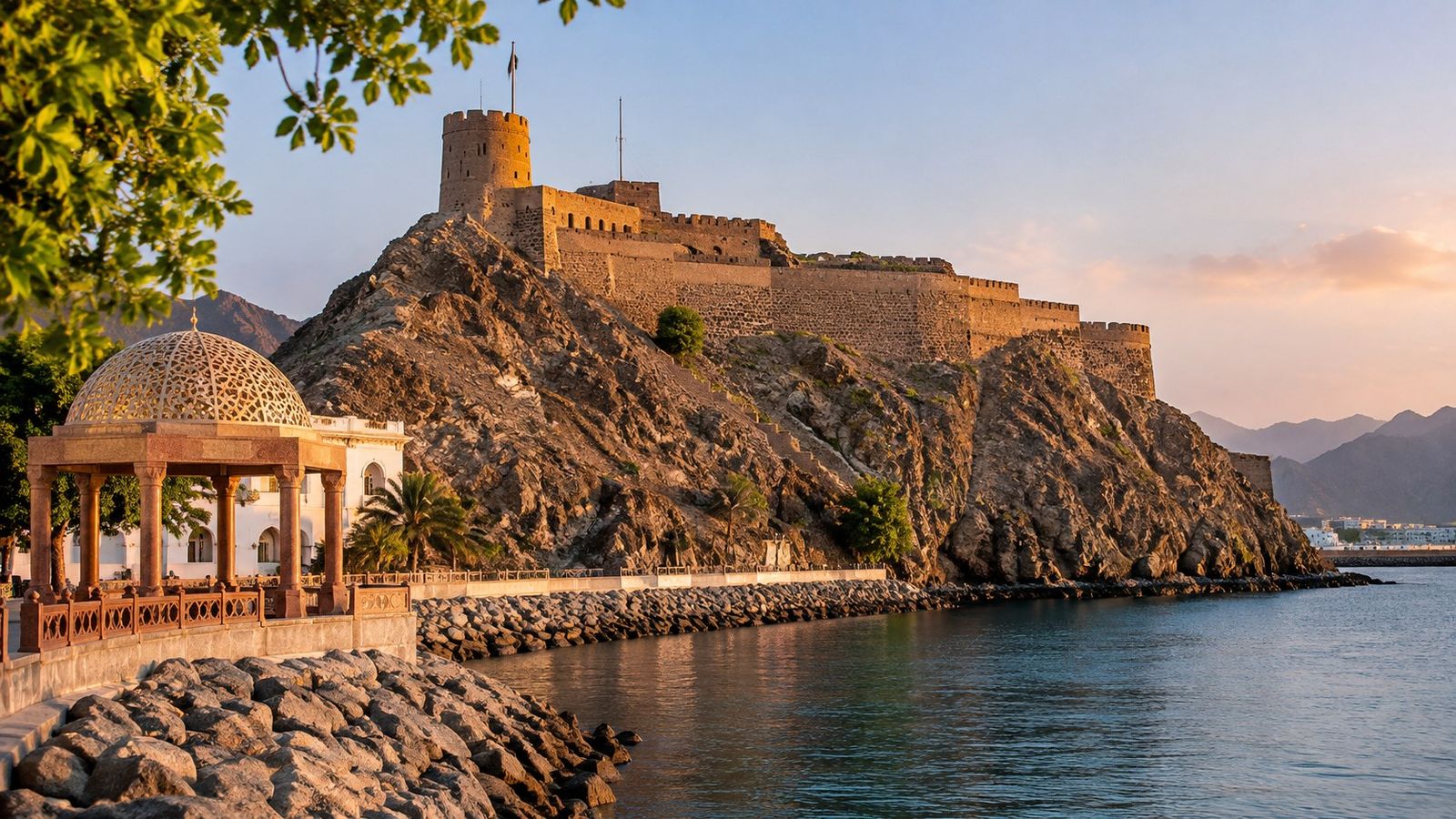
The harbour below
Before Muttrah became a stop on a modern city itinerary, it was a working port. Goods arrived by sea, passed through the souq, and moved onward to settlements inland. The natural harbour helped make this stretch of coast a meeting place for sailors, merchants and local communities. From the Corniche today, the fort still appears to watch over that exchange between land and sea.
A fortress shaped by competing powers
Muttrah Fort belongs to a much wider story of control over the Omani coast. Portuguese forces established and strengthened defences around Muscat and Muttrah during the sixteenth and seventeenth centuries. The fort subsequently formed part of Oman's changing defensive landscape under Omani rulers. Its exact construction sequence is debated: some heritage descriptions date its Portuguese origins to the 1580s, while research using seventeenth-century Portuguese records points to major works in the 1620s and later rebuilding. What is clear is that this rocky position mattered for controlling movement into the harbour and along the coast.
Architecture that follows the rock
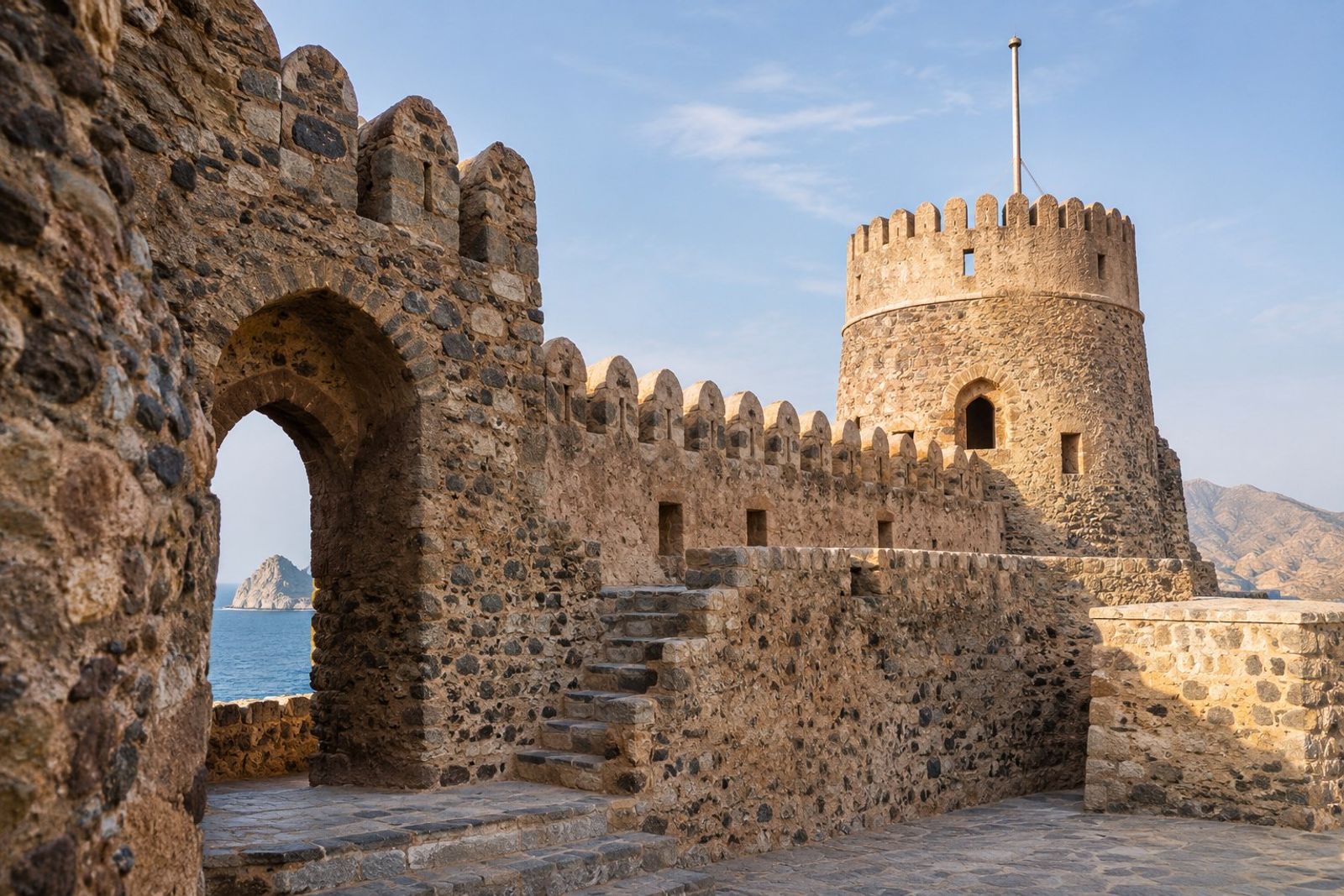
Unlike a fortress laid out on an open plain, Muttrah Fort rises directly from a steep outcrop. Its walls and towers work with the contours of the hill, making the site both conspicuous from the waterfront and difficult to approach. Circular towers, parapets and narrow routes between different levels reveal how defenders could watch the bay and the landward approaches. Look closely at the relationship between the stonework and the natural rock: the landscape is part of the fort's design.
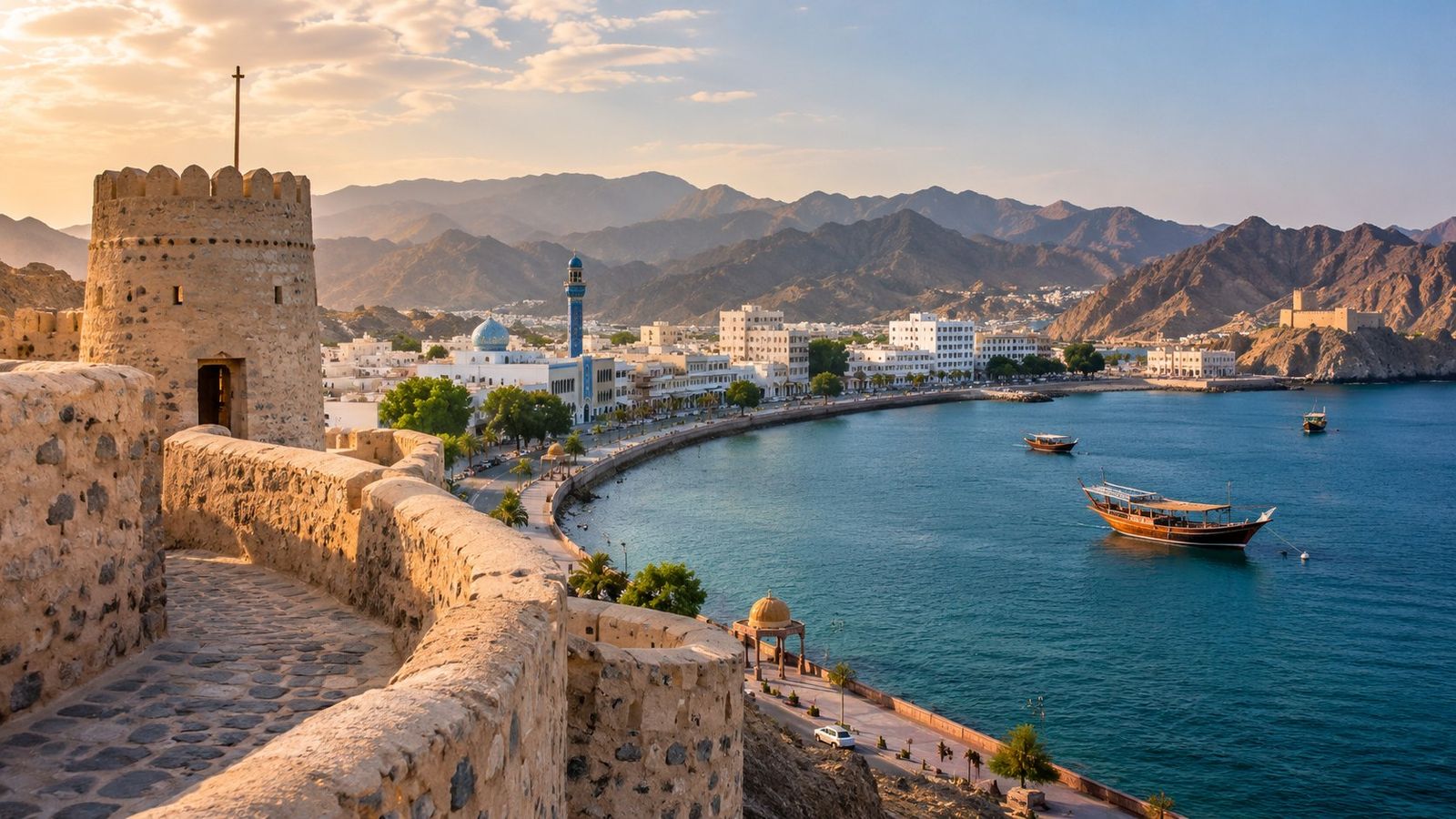
The view tells the story
Climbing the fort changes how you read Muttrah. The Corniche curves around the water, the souq sits behind the waterfront, and mountains hem in the older neighbourhoods. From above, it becomes easier to understand why this harbour attracted trade—and why it needed protection. Take time to look in several directions rather than treating the summit as a single photo stop.
Plan your visit
Muttrah Fort is best explored as part of a slow walk through historic Muttrah. Pair it with the Corniche and the souq, and allow time for the steps and uneven surfaces. Morning light can bring out the textures of the walls; later in the day, the harbour often becomes especially atmospheric. Check current opening hours and ticket conditions before setting out, as visitor information can change.
Visitor essentials
- Opening hours
- Daily, 8:00 AM–11:00 PM (listed by Experience Oman; verify before visiting).
- Admission — non-resident adults
- OMR 3.000 (published visitor rate; verify before visiting).
- Admission — non-resident children
- OMR 2.000 (published visitor rate; verify before visiting).
- Resident admission
- Adults OMR 1.000; children OMR 0.500 (published visitor rates).
- Access
- Expect steps and uneven historic surfaces; use care near elevated viewpoints.
Beyond the walls
A visit to Muttrah Fort is not only about a military monument. It is an introduction to the relationship between Oman's mountains, its ports and its maritime history. Continue on foot to the souq, where the commercial life of the harbour remains part of the district's identity.
Find Muttrah Fort
The fort overlooks Muttrah Corniche in Muscat. Combine your visit with a waterfront walk and Muttrah Souq.
Open map